
Tip – Copays Charged…

One thing I hate more than anything is surprises. Especially when it comes to financial expense. I recently heard from a dear client who was upset and complaining about a co-payment he would be paying today for a CT Scan (“Cat Scan”). The co-payment was going to be $295 and that seemed outrageous to him.

You should know this is a Medicare Advantage plan member; not ACA. He actually said he thought the copay was $311 and that number is not even within the range of allowable co-pays…. so I was concerned.

I called his insurer to see if I could figure out what was going on. The CSR was very helpful and actually took a few moments to pull up his Summary of Benefits and Evidence of Coverage. This was wise since I was sitting on my end looking at the Summary of Benefits and would have nailed her if she misspoke. For his plan, under Diagnostic Tests, it showed that co-pays would be anywhere from $40-$295. This would include CT Scans. A CT Scan is a diagnostic imaging test.

So, bottom line, the $295 was within the acceptable guidelines under the plan. So, at this point, I inquired about how that amount is calculated; who decides what a co-pay should be for a particular item. The answer according to the CSR; it’s up to the provider. She explained that a provider has a price for a product or service (that makes sense) and they; the insurer, negotiates a lower price, which is the amount that the insurance company will pay, and then the provider sets the copay for that item; probably based upon market averages, I would guess.

In this case, the procedure without insurance would cost about $725. That’s what the doctor would charge if someone came in without insurance. The insurance company has negotiated that rate down to $311. That is the amount that they will pay the provider. And the provider has decided on a $295 co-payment from patients. So, all in all the provider is collecting $605 for the procedure instead of his normal $725 he/she would like to get.

In Medicare Advantage plans, benefits “OVERALL” must equal or beat those offered under original Medicare parts A and B. That does not mean each line item for each service should equal or beat the benefits offered under Medicare.

In this case, I just do not feel the plan offers patients much value. It does not mean that the plan is a bad one or anything, but on this item, it just does not help. If Medicare approved (as only an example) a cost for that procedure of $700 then without the plan and using only original Medicare benefits, a patient might be expected to pay 20% of that charge, which would only be $140… or half of the $295 co-pay he is paying by having an insurance plan.

Sometimes it works out like this. Other times, you save a bunch. For instance, let’s say you had a one night stay in a hospital. Well, under original Medicare, you would pay the first $1,300+ of that bill before Medicare took over. Under these types of plans, you would pay your nightly copay; $250-$300. So, in this case, you would save $1,000-$1,050.

Get it?

Overall by the end of the year, and in talking to 100s of clients, they usually find that these plans save them some money.


Todd


Feds tell Bevin basics of dismantling Kynect; former policy chief says using federal exchange could limit choice, raise costs

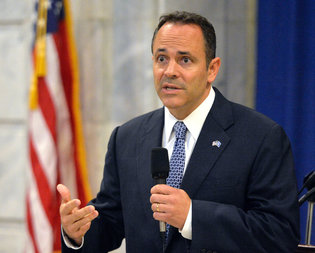
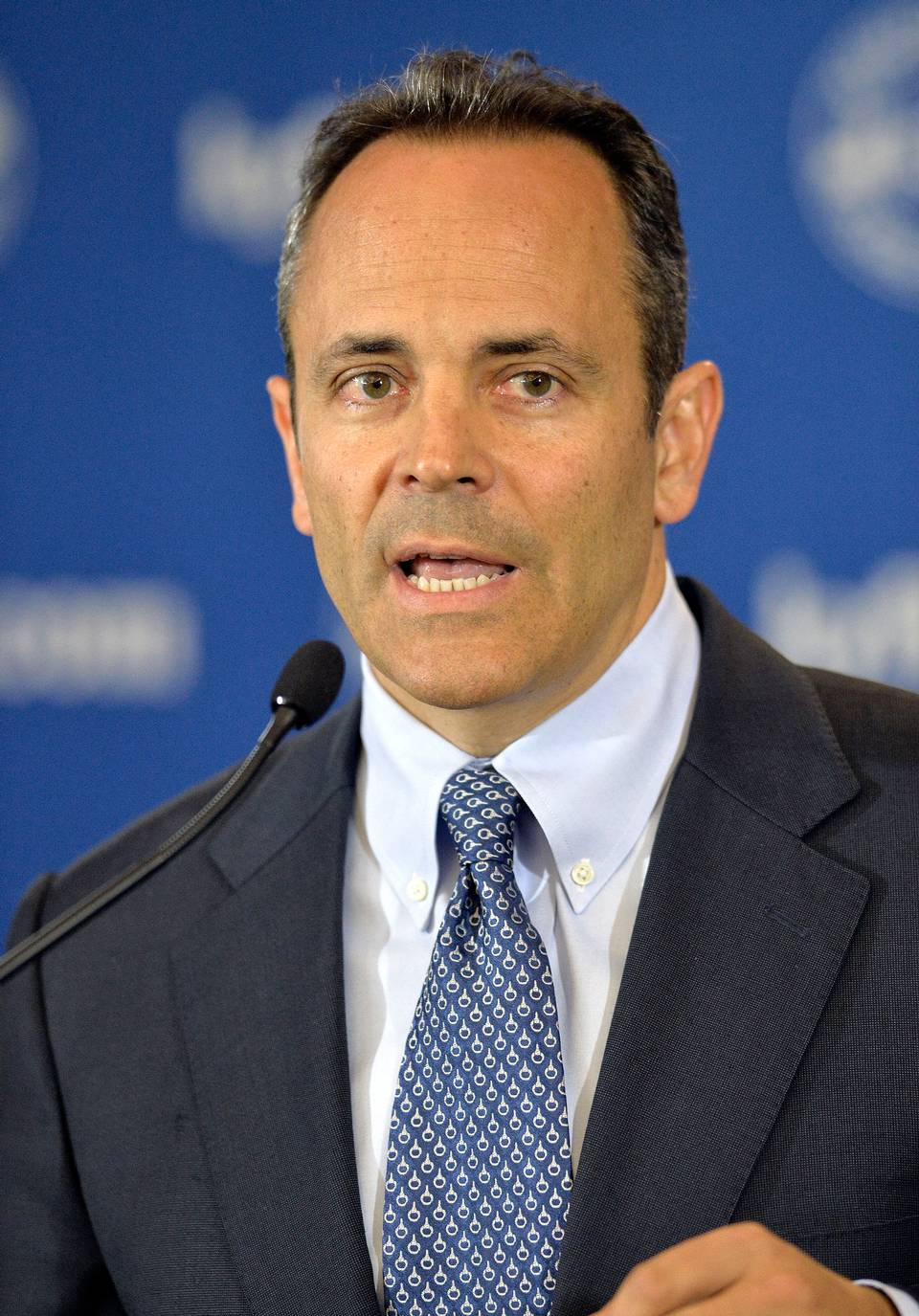
The federal government has told Republican Gov. Matt Bevin what he will need to do to shut down Kynect, the health-insurance exchange started by his Democratic predecessor, Gov. Steve Beshear, and the letter from the Centers for Medicare and Medicaid Services makes clear that it will be a complicated task.

Bevin has said Kynect performs no functions that can’t be handled by the federal insurance exchange, but Emily Parento, who ran the state Office of Health Policy for Beshear, says in an op-ed published in Kentucky newspapers the change might lead to “higher costs and less choice” for those who buy exchange policies.

In a Dec. 30 letter, Bevin gave formal notice to the U.S. Department of Health and Human Services that he plans to dismantle Kynect “as soon as is practicable.” Joe Sonka reports for Insider Louisville that the agency replied to Bevin in a letter dated Jan. 28 “outlining the steps that must be taken to do so before the enrollment period for next year begins.” A copy of the letter accompanies Sonka’s story.

Andrew Slavitt, acting administrator of HHS’s Medicare-Medicaid center, told Bevin, “Ceasing Kynect will create a number of challenges that must be addressed to ensure that access to affordable health coverage continues for Kentucky’s consumers.”

To “ensure a smooth transition,” Slavitt wrote, the state needs “a detailed plan for how Kentucky will continue to meet its obligations” to serve Kynect customers for the rest of 2016. While enrollment has closed, except for former customers of the failed Kentucky Health Cooperative, Medicaid enrollment is open year-round, and Slavitt said Kynect will still need to “process changes in circumstances or special enrollment periods for 2016 current and new enrollees.”

Bevin spokeswoman Jessica Ditto told Sonka, “The letter from HHS is a fair representation of the expectations that were communicated to us regarding the process moving forward. We are in active and ongoing communications with CMS and are working collaboratively to ensure a smooth transition to the federal exchange.”

The letter from CMS notes that if insurance companies plan to offer Kentucky policies on the federal exchange, they must apply to that exchange this spring, probably from April 11 to May 11, Sonka reports.

Kynect Director Carrie Banahan said in August that fewer companies might participate if they had to offer plans through the federal exchange, and Parento made a similar argument in her newspaper op-ed, noting that insurers offered 60 plans through Kynect in the latest enrollment period, half again as many as the 40 offered in the previous year. She said that was “a direct result of the effective work of the team at Kynect, in working with insurers.”

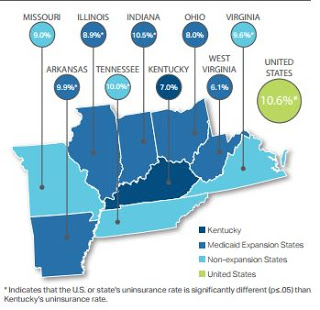
Parento also argued that Kynect has saved customers money, because it has “the lowest median premiums among surrounding states (plus Arkansas) for silver-level family plans, the most widely selected level of plan. The average premium in those states was nearly 10 percent higher — approximately $642 per month compared to Kentucky’s rate of $585 per month. . . . Among all of those states, Kentucky is the only one with a state-based exchange.”

The federal government gave Kentucky $289 million to create Kynect, but the state has almost $58 million of the grants remaining. Slavitt told Bevin that the state will have to return the money — and “will have to cover the costs of setting up its own system to enroll” people in Medicaid, Sonka reports.

Emily Beauregard, executive director of Kentucky Voices for Health, a coalition of health-reform advocates, told Sonka that the loss of “kynectors” assisting consumers on the state exchange “could limit access to coverage for those who need it the most” because 430,000 Kentuckians enrolled in Medicaid through Kynect.
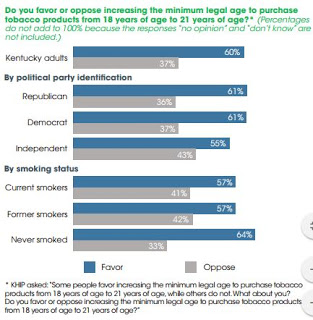
Click the image to read article on smoking in Kentucky and the thoughts of our citizens on the topic of raising the legal smoking age from 18 to 21.

Tip – Call the TOLL-FREE # on your Insurance Card. It’s there for a reason.

Inevitably each year there are a number of problems that come up with clients where they receive bills they were not expecting. Nearly 100% the time the problem can be traced back to the same problem; the client screwed up. That’s the only way I know to say it. Nearly every time they went somewhere, received some service or treatment, and never gave any thought to if the procedure or treatment was covered, or if the person performing the procedure or treatment was “in-network” or not. Folks, whether you are in an HMO or a PPO or an RPPO, it’s ALWAYS important to talk to your insurance company about ANY procedure or treatment you need done. It’s also important that you whip out those insurance cards every time you see your doctor or service provider. AND, be sure that you ask new doctors or providers the right questions. Do NOT ask them, if they “take ________ insurance”. They will always be happy to take your insurance card, and file the claim it seems. They do not necessarily care though if the company pays the claim or not. If they do not collect the money from the insurance company, they know they can later bill you for it. You were the one that received the treatment or service. Right? What you want to ask them always is if they are “”in network” for ______ insurance.” That’s the question to ask. And, make sure that your doctors are using “in network” options on all your tests, labs, etc.

I have had a difficult case this year where the client did most everything right, but STILL ended up receiving bills he was responsible for. He visits the doctor about every 90 days for blood work. He did the right thing by asking the doctor to use Labcorp for his blood draws, and the doctor even wrote that on his referral. It says it really clear… “Labcorp” and then has their provider number right there on the referral. A couple of months after he had the blood draw he received a bill for like $95. After 20 hours of research on my part I think I figured out what happened. The doctor intended for Labcorp to do the blood draw… and they did, BUT, the analysis work that was done on the blood ended up being done as a hospital service by the hospital that is over this doctor’s practice. And because the blood was analyzed by the hospitals people, it was due a $95 copay. The client did everything right I feel. He told the doctor he needed Labcorp to do the blood work. And they did. But, I think either the doctor or the hospital messed up when they did the work. Either the doctor only indicated that the blood was to be drawn by Labcorp and no instructions on where to process it, or the hospital just billed incorrectly. Either way, it was a mess. And, still to this moment, my client is stuck with this bill. I am telling you now guys; always, always, always be specific about the services and treatments and providers you are using. If you are not, you will get bills from time to time, and if you are like me, you just HATE these sorts of surprises. Call the numbers on the back of your cards and verify where and how to get all your procedures and services and treatments performed BEFORE you receive them. That is the best advice I can ever offer.

UnitedHealth CEO: Obamacare losses worsening, not sustainable past 2016

The chief executive officer of the largest U.S. health insurance company on Thursday told investors that the company’s losses from Obamacare were worsening, showed no signs of improvement, and would be unsustainable beyond 2016. UnitedHealth Group CEO Stephen J. Hemsley made the comments in a conference call after the insurer warned investors about $425 million in losses primarily due to its participation in Obamacare, even though the company previously expected that the exchanges would have a neutral effect on profits. He even expressed some regret about participating in the program in the first place. Asked whether the company would be willing to tolerate losses beyond 2016, Hemsley was emphatic: No. We cannot sustain these losses. We can’t really subsidize a marketplace that doesn’t appear at the moment to be sustaining itself.

Source: UnitedHealth CEO: Obamacare losses worsening, not sustainable past 2016

1 8 9 10 11 12 16